
How to Choose the Right Device
In recent years, e-book market has continued to grow steadily, with reading demand further accelerated by the pandemic. As more readers embrace digital formats, the variety of eReaders available has also expanded—from mainstream 6-inch models to large 13.3-inch devices, ranging from pure reading functions to hybrid models with handwriting support, and from closed ecosystems to open systems. With so many choices, how should readers select the e-reader that best fits their needs and preferences? Below, we outline the key features and differences for your consideration.
Why Choose an eReader?
Before deciding whether to buy an eReader, let’s first look at the devices available for e-book reading. The first option is mobile devices: by simply downloading a platform’s dedicated app on a smartphone or tablet, users can read any e-book purchased on the platform.
Then secondly, and most ideal option is the eReader itself. The main reason lies in its E Ink display technology. Unlike LCD or OLED screens used in mobile devices, E Ink uses reflective, bistable technology that mimics the look of printed paper. This greatly reduces eye strain, making e-readers particularly suitable for long reading sessions. Device sizes also correspond closely to real books, comics, or magazines, creating a more natural reading experience. Furthermore, without distractions such as social media, video, or games, e-readers allow readers to fully immerse themselves in their books.
Five Key Factors When Choosing an E-Reader
For many paper-book lovers, e-books may not seem like the first choice—and even if they do, reading on a mobile app might feel sufficient. However, e-readers are not meant to replace print; rather, they offer unique advantages that make them increasingly popular. To meet diverse reading habits, brands have launched a wide range of models. Here are the five main aspects to consider:
1. Closed vs. Open Systems
E-readers generally fall into two categories: closed ecosystems and open Android systems.
•Closed systems are platform-specific, supporting only books purchased from their own stores but usually allowing file imports (EPUB, PDF, etc.). They tend to be stable and continuously updated. Examples include Rakuten Kobo, Amazon Kindle, and Readmoo mooInk.
•Open Android systems allow installation of third-party apps, making cross-platform reading possible. However, compatibility issues may arise. Brands include HyRead Gaze, ONYX BOOX, and Likebook.
2. Reading Only vs. Handwriting Support
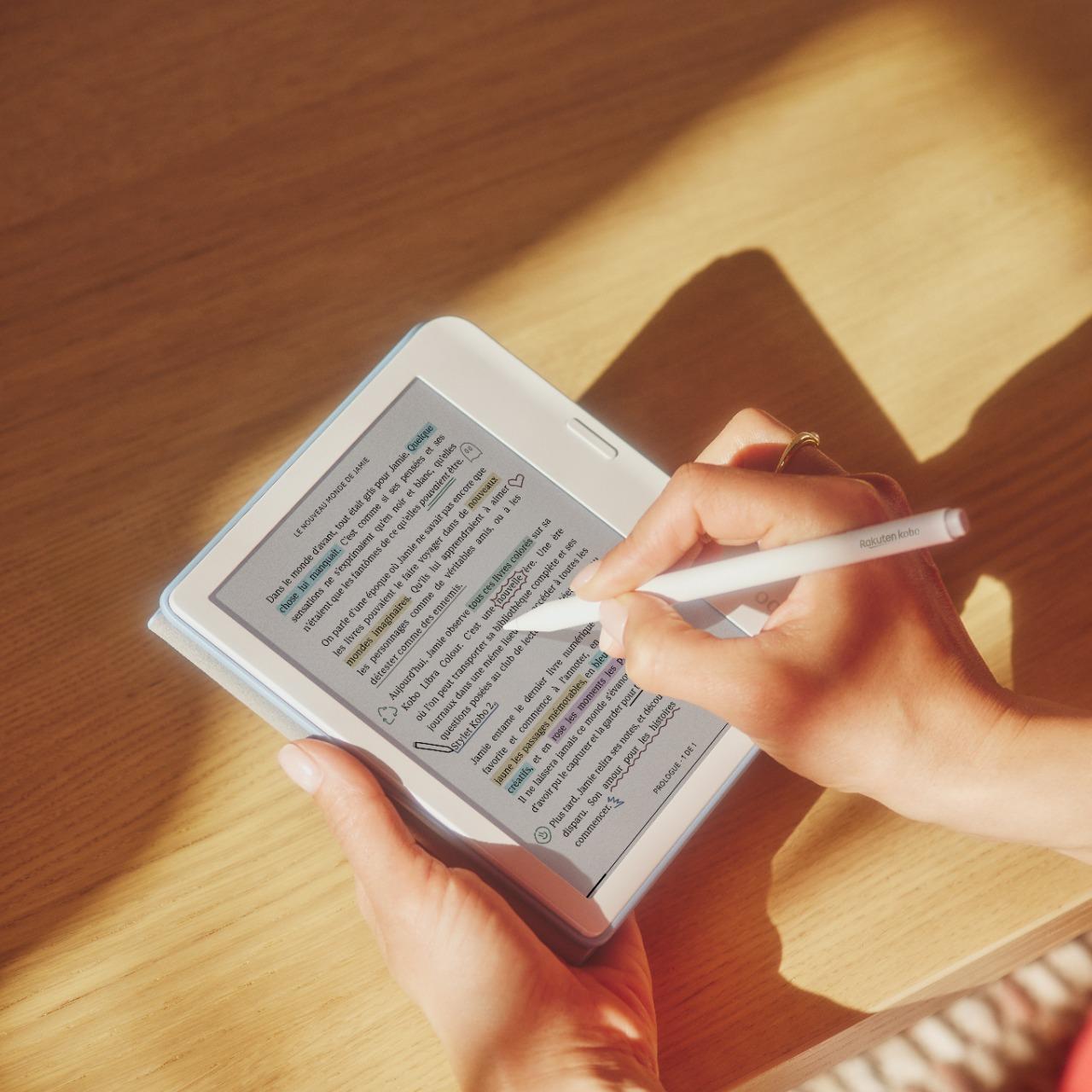
While most e-readers focus on pure reading, some models now support handwriting, letting readers highlight, annotate, and take notes.
•Kobo offers both: compact 6-inch and 7-inch pure reading models like Kobo Nia, Clara 2E, and Libra 2, as well as handwriting-enabled devices such as the 8-inch Kobo Sage and 10.3-inch Kobo Elipsa 2E, which work with the Kobo Stylus.
3. Black & White vs. Color
Black-and-white 16-level grayscale E Ink has long been the standard. Recently, color E Ink technology has emerged, with Kobo officially launching color e-readers in 2024. These use a color filter layer on top of black-and-white E Ink, producing up to 4,096 colors—similar to the soft tones of newspaper printing. While not comparable to LCD or OLED displays, they bring a new dimension to comics and illustrated books.
4. Size, Storage, Price, and Language Support
Readers should also consider usage habits: Do you read mostly at home, on commutes, or even in the bath? Do you prefer novels, manga, or academic papers? Do you need audio or handwriting support?
•Kobo’s lineup is wide and versatile, with models from 6-inch entry devices to large 10.3-inch tablets. All support Traditional Chinese, among 15 languages, and can handle up to 15 file formats (EPUB, PDF, MOBI, TXT, HTML, etc.).
Examples:
•Kobo Clara BW (6”) – Lightweight (174g), 16GB storage, weeks-long battery.
•Kobo Clara Colour (6”) – Adds color display.
•Kobo Libra Colour (7”) – Color E Ink Kaleido™ 3, 32GB storage (24,000 books), Bluetooth for audiobooks, waterproof (IPX8).
•Kobo Sage (8”) – E Ink Carta 1200, handwriting with Stylus 2, Bluetooth audiobooks, 32GB, waterproof.
•Kobo Elipsa 2E (10.3”) – Largest display, handwriting, 2GHz processor, 32GB, Bluetooth audiobooks, waterproof.
5. Extra Features and Services
Kobo devices also stand out with system integrations:
•Cloud storage: Dropbox and Google Drive are available Libra Colour, Sage, and Elipsa 2E. Intapaper and Over Drive are available for all Kobo eReaders.
•Audiobook support: All Kobo models include Bluetooth for audiobook playback, with an expanding library of Chinese and international titles.
•Library access: Some models support OverDrive, enabling borrowing from partner libraries.
After considering these five factors, readers should have a clearer understanding of the types of eReaders available. No matter the context—at home, on commutes, or even poolside—there’s a model suited to every lifestyle. With the right device, anyone can enjoy the freedom and pleasure of reading anytime, anywhere.